
 Save
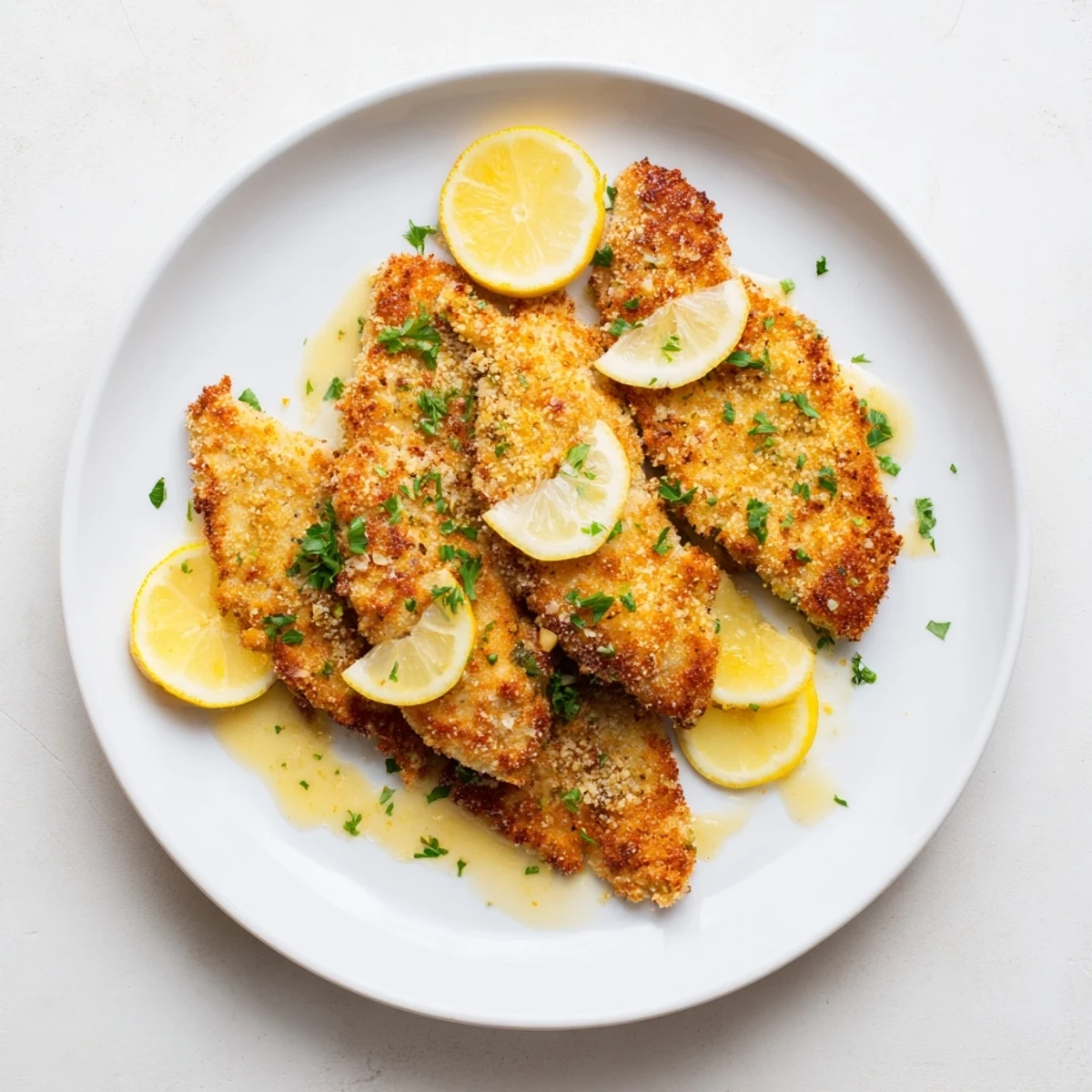
Save This Italian-American classic transforms ordinary chicken breasts into something special. The cutlets are coated in a triple-layer breading of flour, egg wash, and a flavorful blend of Romano, Parmesan, and Italian breadcrumbs before being pan-fried until golden and crispy.
What really makes this shine is the pan sauce—butter, garlic, chicken broth, and fresh lemon juice create a bright, tangy finish that cuts through the rich cheese coating. The whole dish comes together in just 45 minutes and pairs beautifully with pasta, roasted vegetables, or a simple green salad.
The smell of sizzling cheese mingling with lemon is one of those things that pulls people into the kitchen before you even call them for dinner. I discovered Lemon Chicken Romano on a rainy Tuesday when the fridge offered nothing but chicken breasts and a bag of lemons that had seen better days. What started as a desperate pantry scrounge turned into the dish my family now requests more than anything else I cook. That first batch was messy, the coating slid off in places, and I burned the garlic, but the flavor underneath all those mistakes was extraordinary.
My neighbor Linda knocked on my door the second time I made this, holding a bottle of Pinot Grigio and asking what on earth I was cooking. We ended up standing in the kitchen eating straight from the skillet while her husband waited for her to come home.
Ingredients
- 4 boneless skinless chicken breasts: Pound them to an even thickness so they cook uniformly and the coating adheres properly.
- Salt and black pepper: Season the chicken generously before coating, as this is your only chance to flavor the meat itself.
- 2 large eggs and 2 tbsp whole milk: The egg wash acts as the glue that holds everything together, and a splash of milk keeps it from being too thick.
- Half cup all-purpose flour: This first coat creates a dry surface for the egg to grip, which prevents the breading from sliding off during cooking.
- Three-quarter cup grated Romano cheese: Romano brings a sharp, salty punch that Parmesan alone cannot achieve, so do not skip it.
- One-quarter cup grated Parmesan cheese: Adds a nutty depth that rounds out the sharper Romano beautifully.
- 1 cup Italian-style breadcrumbs: These form the structural backbone of the crust and carry subtle herbs that complement the lemon.
- 2 tbsp unsalted butter: Butter combined with olive oil gives you a higher smoke point while keeping that rich, golden flavor.
- 3 tbsp olive oil: Use a generous amount to ensure the chicken fries rather than steams in the pan.
- 2 cloves garlic minced: Garlic bloomed in the residual pan fat becomes the aromatic foundation of your entire sauce.
- 1 cup low-sodium chicken broth: Low-sodium lets you control the salt level while deglazing all those crispy bits from the bottom.
- Zest and juice of 1 large lemon: Use both for layered citrus flavor, since the zest provides fragrance while the juice delivers bright acidity.
- 2 tbsp chopped fresh parsley: Fresh parsley at the end cuts through the richness and adds a pop of green that makes the dish look finished.
- Lemon slices for garnish: A visual cue that tells everyone at the table exactly what they are about to taste.
Instructions
- Prep and pound the chicken:
- Pat the chicken breasts completely dry with paper towels, then place each one between two sheets of plastic wrap and pound to a half-inch thickness using a meat mallet. Season both sides well with salt and pepper.
- Set up your breading station:
- Arrange three shallow bowls in a row, one with flour, one with beaten eggs mixed with milk, and one with the Romano, Parmesan, and breadcrumbs combined. This assembly line keeps your hands cleaner and your workflow smooth.
- Bread each cutlet thoroughly:
- Dredge each chicken breast first in flour, shaking off excess, then dip into the egg wash, and finally press firmly into the cheese-breadcrumb mixture. Really press the coating on with your palms so it bonds tightly to the meat.
- Pan-fry to golden perfection:
- Heat 1 tbsp butter and 2 tbsp olive oil in a large skillet over medium-high heat until the butter foams and starts to subside. Cook the chicken 4 to 5 minutes per side until deeply golden and cooked through, working in batches and adding more oil as needed, then transfer to a plate and cover loosely with foil.
- Build the lemon sauce:
- Reduce the heat to medium and add the remaining butter and olive oil to the same skillet. Sauté the garlic for about 30 seconds until fragrant but not browned, then pour in the chicken broth, lemon zest, and lemon juice, scraping up every bit of fond from the bottom.
- Bring it all together:
- Let the sauce simmer for 3 minutes to reduce slightly, then return the chicken to the skillet. Spoon the sauce over the cutlets and let everything simmer together for 2 minutes so the flavors marry.
- Finish and serve:
- Scatter fresh parsley over the top and tuck lemon slices around the edges of the skillet. Serve immediately while the crust is still shatteringly crisp.
 Save
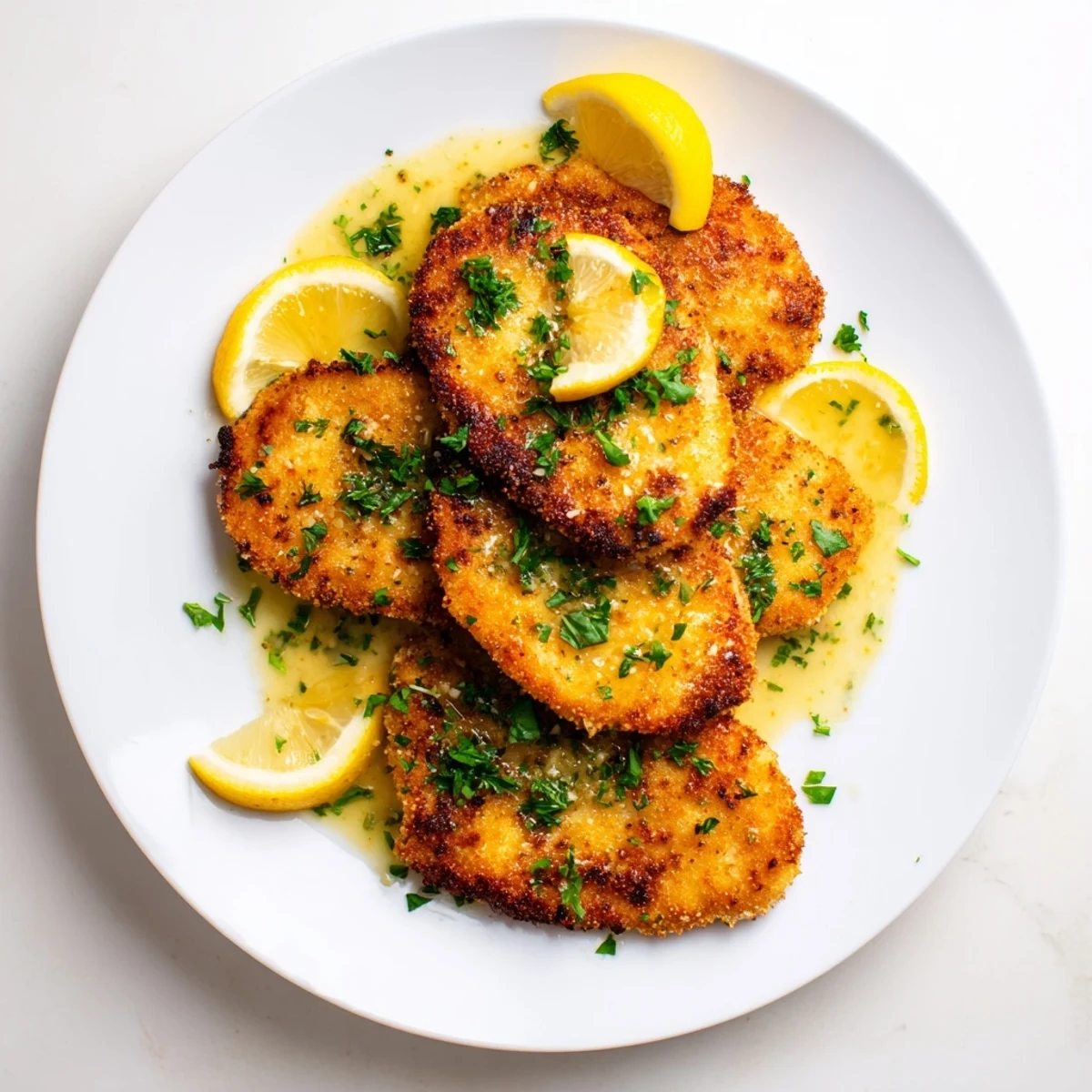
Save There is something deeply satisfying about hearing that first sizzle when the cheese-crusted chicken hits the hot pan. It is the sound of dinner about to become an event rather than just a meal.
Serving Suggestions That Actually Work
This chicken loves a starchy companion to soak up every drop of that lemony sauce. A simple plate of angel hair pasta tossed with olive oil and a pinch of red pepper flakes makes the perfect bed for the cutlets. A crisp arugula salad with shaved Parmesan and a light vinaigrette balances the richness beautifully on warmer evenings.
Troubleshooting Common Pitfalls
If your coating is falling off, you are likely not pressing it firmly enough during the breading step or your oil is not hot enough when the chicken goes in. Wet chicken breasts will also sabotage your breading, so pat them thoroughly dry before you even open the flour. Working in batches is non-negotiable because crowding the pan drops the temperature and steams the chicken instead of frying it.
Making It Your Own
Once you have the basic technique down this recipe bends easily to whatever you have on hand. A teaspoon of drained capers tossed into the sauce adds a briny punch that plays beautifully with the lemon. You could swap the Romano for all Parmesan in a pinch, though you will lose some of that aggressive salty bite that makes the dish special.
- A pinch of red pepper flakes in the breadcrumb mix adds warmth without overwhelming the citrus.
- A splash of dry white wine deglazed into the pan before the broth adds another layer of complexity.
- Always taste the sauce before serving and adjust with salt, pepper, or an extra squeeze of lemon as needed.
 Save
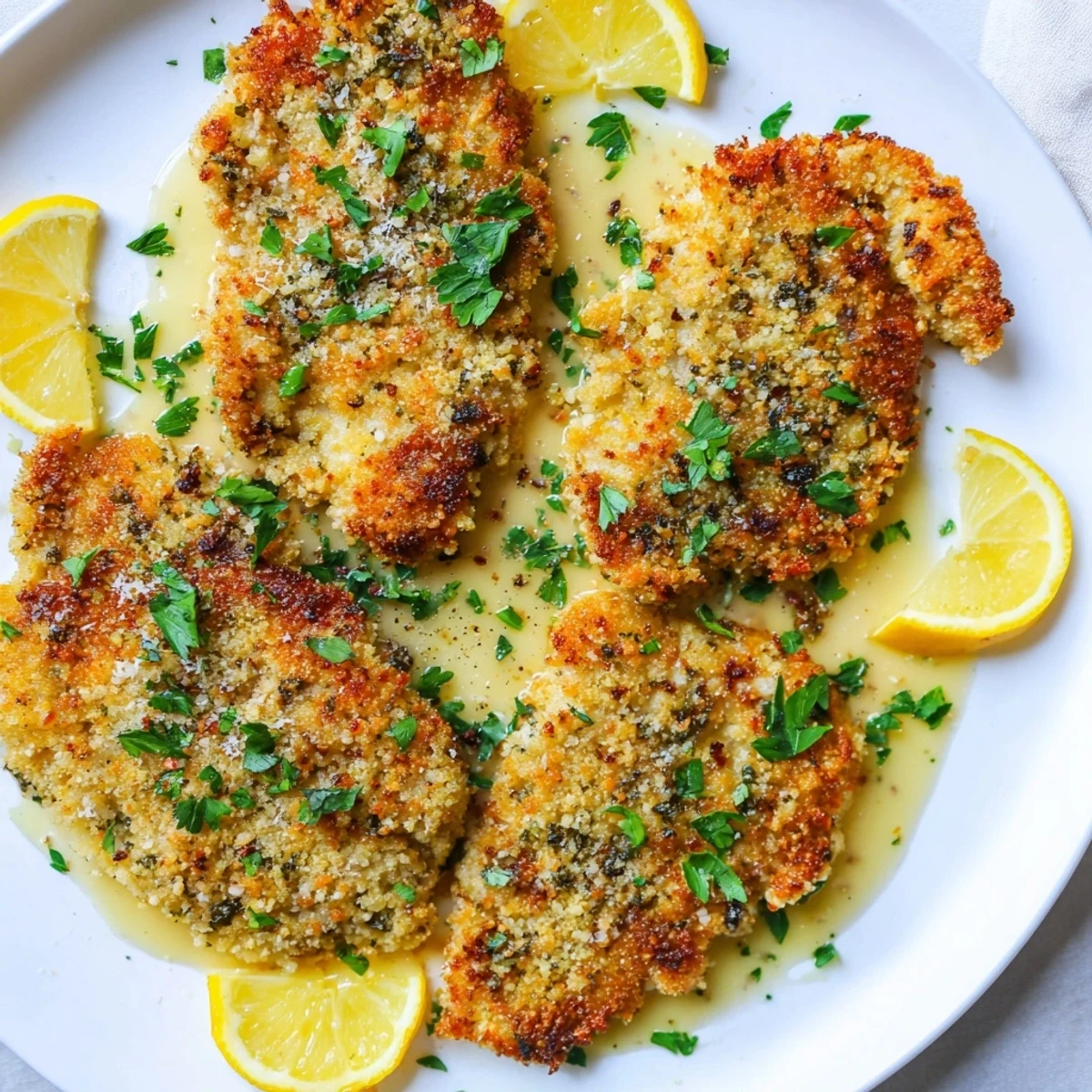
Save Keep a warm oven ready at 200 degrees Fahrenheit for holding finished cutlets while you cook remaining batches. This dish is best served the moment it comes out of the pan, surrounded by people who appreciate the kind of dinner worth waiting for.
Recipe FAQs
- → What's the difference between Romano and Parmesan cheese?
-
Romano has a sharper, saltier flavor compared to Parmesan's nutty, milder taste. Both work beautifully here—use all Romano for more punch or all Parmesan for a subtler finish.
- → Can I make this ahead of time?
-
The chicken coating can be prepped ahead and refrigerated for up to 4 hours before cooking. For best results, fry fresh and reheat gently at 300°F. The sauce can be made ahead and warmed separately.
- → How do I prevent the coating from falling off?
-
Pat chicken thoroughly dry before breading. Press the cheese-breadcrumb mixture firmly onto each cutlet to help it adhere. Let breaded chicken rest for 10 minutes before frying for better adhesion.
- → What side dishes work well?
-
This pairs perfectly with angel hair pasta, risotto, or roasted potatoes. For lighter options, try arugula salad with vinaigrette or steamed asparagus with lemon.
- → Can I bake instead of fry?
-
Bake at 425°F for 20-25 minutes, flipping halfway. The crust won't be quite as crispy as pan-frying, but still delicious. Spray lightly with olive oil before baking.